
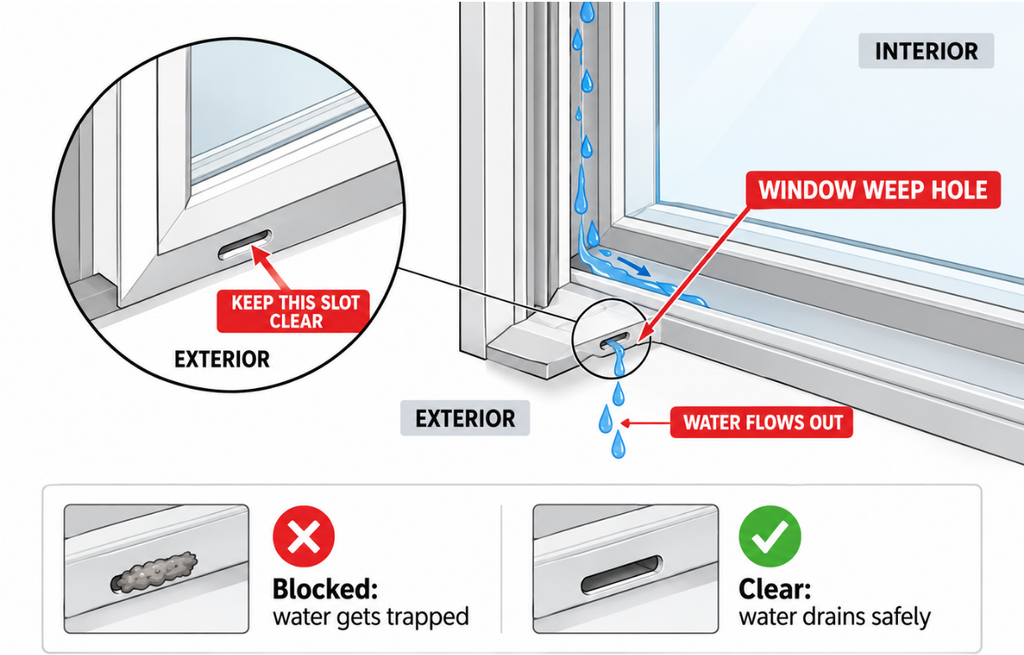
A weep hole drains trapped water out of your window, so blocking it traps that water inside.
You spot a tiny slot at the bottom of your window and wonder if it is a flaw. It is not. That slot is a window weep hole, and it lets rain out of your frame. Many homeowners seal it by mistake, and then water has nowhere to go. Upstate SC adds humid summers and fast storms, so drainage matters here. This guide shows the purpose of weep holes, how they work, and how to clean them in minutes. You will also learn what never to do.
TL/DR
- A weep hole is a small slot at the bottom of the window frame. It looks like a tiny gap, but it works as a drain.
- It lets rain and condensation run out of the track to the exterior. That purpose keeps water away from your frame and wall.
- Dirt, paint, or caulk can block the slot. Water then pools in the track and soaks the frame, sill, and wall.
- Clean each hole in spring and fall. Never caulk, tape, or paint over it.
What Is a Window Weep Hole?
A window weep hole is a small slot at the bottom of the frame that drains water. A weep hole works like a tiny gutter for your window. It sits low on the window frame, so water leaves fast. Some people write it as weepholes, but the meaning stays the same. Most residential windows from major makers have a drain path like this. Windows with weep holes use these drainage holes to drain water. Each unit has its own design, so the slots vary.
Where a Window Weep Hole Sits on Your Frame
Most weep holes sit on the outside face of the lower rail. You often find one near each lower corner. Some windows also have a matching opening inside the track. Water runs along the window sill and out through these openings. A crew that installed your window should leave them open. Water never climbs to the top of the frame.
What They Look Like (Slots, Holes, and Covers)

Weep holes look like short slots or small round holes. Some have a flap, a baffle, or a mesh screen. These covers keep out insects and bugs while water still drains. Frame makers cut the slots into the extrusion. Vinyl frames show them clearly. A casement window may hide its drain path better.
Are Window Weep Holes the Same as Brick Weep Holes?
No. Brick weep holes are a different thing. They sit in the mortar at the base of a brick wall. They let moisture escape from behind the brick. Window weep holes sit in the window frame. Do not mix them up when you clean or paint.
Sliding and hung windows show their slots most often. See our double-hung window installation in Upstate SC for one common style.
How Does a Weep Hole Work?
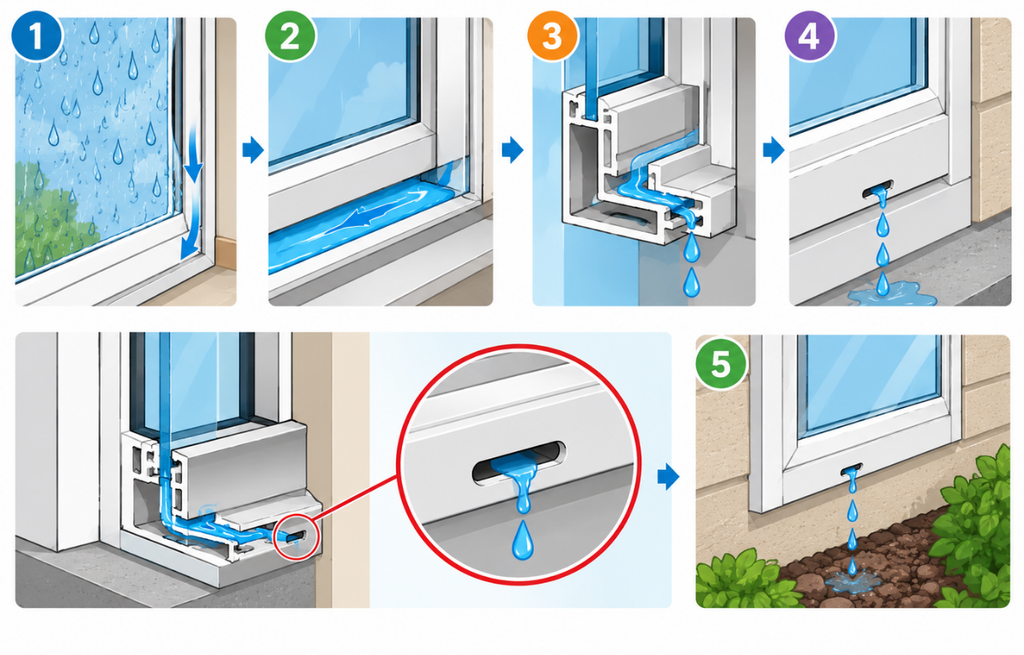
Water gets past the glass and gaskets, collects in the track, and runs out through the weep hole.
Where the Water Comes From
No window can seal out every drop. Rain finds tiny gaps around the sash, the moving part that holds the glass. Wind pushes rain sideways. Warm, damp air also turns to droplets on a cold pane. That condensation runs down and lands in the track.
The Path Water Takes Through the Frame
Water drops into the lower track first. The sloped sill tilts toward the outside. Gravity pulls the water along that slope. It then reaches the weep hole and flows outward. This path keeps water away from your wall. Windows Canada shows the same path in its weep hole guide.
Why a Tiny Hole Matters So Much
The slot is small, but it carries the whole load. The science is simple: water runs downhill, and a clear exit keeps it moving. A blocked slot stops that flow. Even a sash that can slide with ease cannot fix a track full of water.
Why Should a Weep Hole Stay Clear?

A blocked weep hole traps water, and that water can rot wood and feed mold. Clogs build slowly. Dust, pollen, and dead bugs pack into the slot. Paint and caulk close it in one coat. Once the hole shuts, and the water stays. That is how water damage from weep holes that cannot drain starts. A clear hole helps prevent it.
Water Pools in the Track and Leaks Inside
Trapped water starts to pool in the track. It can fill the channel in one storm. Water rises to the height of the track lip. Then it can spill over the edge onto the sill. You may see drips on the sill after rain. That water can soak the drywall and reach your living space.
Hidden Rot and Mold
Wet wood rots. Damp insulation and drywall grow mold. Both hide inside the wall, so you may not notice for months.
Stains, Swelling, and Peeling Paint
Look at the trim under your window. Brown stains, bubbled paint, and swollen wood point to water. Wet vinyl does not rot, but the wood around it does. A homeowner often sees peeling paint first.
Why Clear Weep Holes Work in Every Climate
Every climate sends water at your windows, so a clear weep hole protects your frame wherever you live.
Hot and Humid Weather Like Upstate SC
Summers here feel sticky, and storms roll in fast. The SC State Climatology Office logged almost three inches of rain in one hour at Greer in 2003. Flash flooding hit Greenville and Spartanburg. Pollen and leaves also pack the slots each spring. Check yours after heavy weather.
Cold Winters
Winter brings freeze and thaw. Water stuck in the track can freeze and push on the frame. A clear hole lets water out before the cold snap hits.
Heavy Rain and Wind-Blown Storms
Wind pushes rain sideways into the small gaps. A clear weep hole gives that water an exit. Without one, the track fills fast.
Hot and Dry Weather
Dry climates still clog the slots. Dust and debris blow in and settle. One storm can overwhelm a dirty track, even if rain is rare.
Back home in Upstate SC, humid summers and fast storms make clear drainage a priority.
Signs Your Weep Holes Are Blocked
Standing water, drips, stains, and a musty smell all point to a blocked weep hole.
Water That Stays in the Track
Open the window after rain and look at the track. A puddle that sits for hours means the drain is stuck. Next, inspect the outside slot for dirt, paint, or caulk.
Drips and Stains on the Sill or Wall
Water that cannot leave the track finds another way out. It drips on the sill or runs down the wall below. Watch for dark lines and peeling paint.
A Musty Smell Near the Window
A damp, sour smell near the frame means water sits somewhere. Mold grows in damp, closed space.
How to Clean a Weep Hole
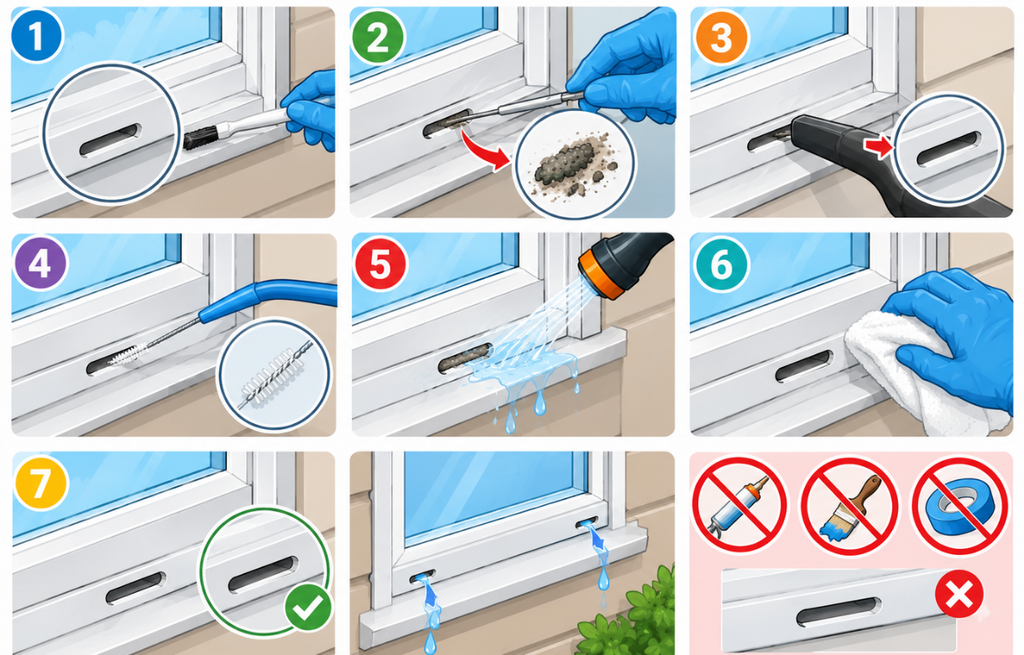
Wipe the track, clear the hole with a soft tool, and flush it with water. You need a soft brush, a pipe cleaner, and a cup of water. The U.S. Department of Energy’s PNNL cleaning guide also lists a drain brush and a hose. Work gently, and clean one window at a time.
- Clear the track. Wipe or vacuum out dirt and debris.
- Clear the hole. Push a pipe cleaner or soft brush into the slot. Pull the debris out. Do not push it deeper.
- Flush with water. Pour a small cup of water into the track. The water should run out the outside slot.
- Check the exterior side. Look for caulk or paint over the slot. Cut it away with care.
- Repeat each season. Do it in spring and fall, and after big storms.
If the track still holds water, call a pro to look at the frame. Our crew at The Window Source of Upstate SC can check your windows during a free in-home estimate.
What Not to Do With Weep Holes
Never caulk, tape, paint over, or plug a weep hole.
Why Sealing a Draft Makes Things Worse
A draft bugs you, so you tape the slot. That traps water. A worn seal or a gap at the sash usually causes the draft, not the hole. Fix the real gap with fresh weatherstripping. Caulk the joint where the frame meets the wall, never the slot. Foam, tape, and solid fillers all stop drainage.
Painters, Caulkers, and Siding Crews: What to Tell Them
Tell every crew before they start: leave the weep holes open. Painters often coat the slot. Caulkers may fill it. Siding crews can cover the lower frame with trim. Ask each crew to keep the drain path clear. At The Window Source of Upstate SC, our team keeps the weep holes open when we install windows.
Planning new exterior work? See our home siding installation in Upstate SC.
Long-Term Benefits of Keeping Weep Holes Clear
Clear weep holes protect your frame, walls, and window for years.
- Stops Hidden Rot and Mould: Dry frames and walls do not rot. A clear drain also starves mold.
- Keeps Your Frame, Sill, and Paint in Better Shape: Dry trim holds paint, and the sill stays firm.
- Helps Your Window Work the Way It Was Built: Makers design the drain path on purpose. A clear path keeps their technology working. An operable sash glides better when the track stays dry. Regularly cleaning the slots keeps the performance the maker planned.
- Helps Keep Your Window Warranty Valid: Most window and door makers list installation and care rules. A blocked drain can break those rules. Read your manufacturer’s guide and correct any problem early. Rules vary, so check your own.
- Saves Repair Costs Later: A quick clean costs little. Rot, mould, and drywall repairs can require a pro and cost far more. At The Window Source of Upstate SC, we install windows so water drains the way the manufacturer planned.
Ready for a new window? Learn about our window installation in Upstate SC.
FAQs
Can I seal my window weep holes to stop a draft?
No. Sealing the hole traps water in the frame. Fix drafts at the sash or frame edges with weatherstripping or caulk, and keep weep holes open.
Do all windows have weep holes?
No. Many sliding and hung windows have visible slots. Casement, awning, and fixed windows may drain in less obvious ways, so check your maker’s guide.
How often should I clean my weep holes?
Clean them at least twice a year, in spring and fall. Check them after heavy storms, and sooner if you see pollen, dust, or leaves piling up.
What happens if weep holes get blocked?
Water pools in the track, then spills into the frame and wall. That can cause leaks, stains, mold, and rot. Clear the hole as soon as you notice it.
Why do bugs come in through weep holes?
Small insects crawl through open slots to reach the inside. A mesh cover or baffle blocks them while water still drains. Never plug the hole to stop bugs.
The Bottom Line on Weep Holes
A window weep hole is small, but it protects a lot. Keep the slot clear, clean it each season, and never seal it. That one habit guards your frame, wall, and floor.
Want a pro to check your windows? At The Window Source of Upstate SC, we serve Greenville, Spartanburg, and Clinton. Book a free in-home estimate, and our team will look at your frames and drains with you.